Digging Into the Garnish Garden
By Christy Johnson
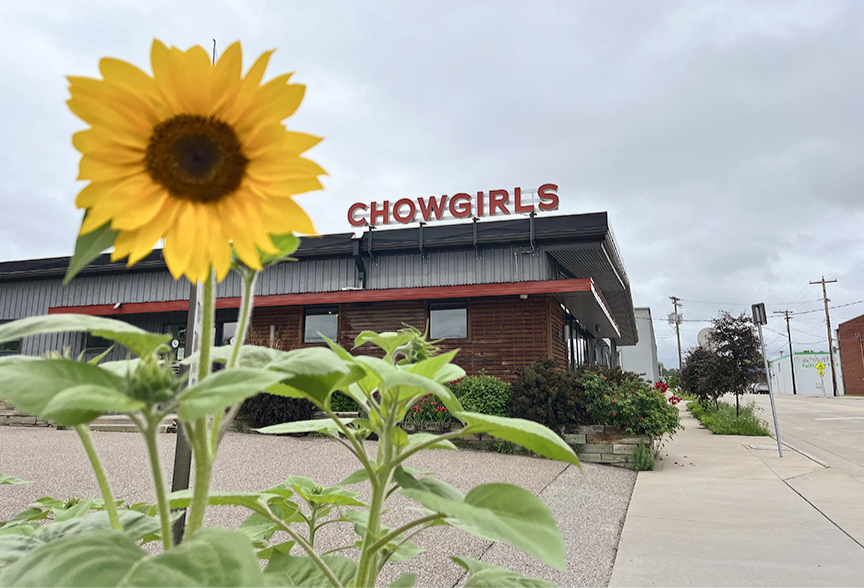
When Amy Brown and Heidi Andermack met in 2003, they bonded over their passion for creative food, elevated events, and gardening. Soon they were shopping at farmers markets together and cooking dishes inspired by local, seasonal ingredients for house parties and friends' art openings.
In 2004, those first recipes in hand, the two friends launched Chowgirls. Today, that farmers-market DNA is still very much alive, especially in the Garnish Garden that's growing right outside our business' back door.
The garden started, as many good things do, with a problem. When we moved into our industrial neighborhood headquarters in Northeast Minneapolis, the border of our small parking lot was a gnarly patch of weeds. It wasn't exactly the vibe we were looking for, especially as a company that cares deeply about the environment. Thankfully, Nicole Stanoch, who is an apple farmer in addition to being a Chowgirls bartender and delivery driver, took one look at that scrubby strip and saw something else entirely: potential.

Since 2021, Stanoch has played a key role in transforming our soil and garden practices to help us grow safe, sustainable, and hyper-local garnish right on-site. She drew on the organic farming techniques she had learned from Bruce Bacon of Garden Farme — the first certified organic farmer in Minnesota — like layering sand, compost, and straw to retain moisture, reduce watering needs, and revive depleted soil.
These regenerative farming practices, adapted for an urban parking lot, were just the beginning. Year after year, Stanoch kept building. We're now up to eight garden boxes, a couple of raspberry bushes, and an apple tree. A Pollinator Prairie was also created on a slope between our property and our neighbor's, where milkweed, sedum, day lilies, mullein, and other plants support local bees and butterflies. The boulevard along our busy street got a refresh as well from a mix of wildflowers, which, in addition to being beautiful, also means we don’t have to maintain grass.
GROWING WHAT WE ACTUALLY NEED
As it can often be with gardening, however, not everything works out as planned. Early on, we tried to grow produce like tomatoes and summer squash. But our team quickly realized we could never cultivate enough to keep up with the demand that catered events require. So, we pivoted.
Now, we focus on garnishes. These edible herbs and flowers — like nasturtiums, marigolds, bachelor buttons, lilacs, zinnias, pansies, mint, basil, oregano, chives, sage, sunflowers, roses, and hibiscus — help make our platters, cocktails, and tablescapes gorgeous and unique.

We've also had success with raspberries, rhubarb, and chestnut crab apples, which can often be found in our seasonal pastries and desserts.
Chowgirls' bartenders use the garden's fresh flowers and herbs to make simple syrups and sugars for cocktails, and our pastry chefs press blooms to preserve them for cakes and sweets in the cold-weather months.
Dahlias, daffodils, tulips, and hydrangea are snipped from the garden for our Concepts event design team to beautify clients' tablescapes and floral arrangements. Every element is part of a cohesive visual story that's not only seasonal, sustainable, and local, but also stunning. We love to create seamless compositions in which the aesthetics are just as memorable as the food and beverages. In fact, aesthetic design has become a hallmark of every Chowgirls event.

WALKING THE TALK
For a company with values centered on people, planet, and profit, the Garnish Garden isn't just a fun side project. It's a working, constantly evolving example of our commitment to the environment and our mission. Growing on-site is the epitome of "local," and our regenerative soil practices mean we're giving back to the earth rather than simply taking from it.
As always, we bring to the garden a closed-loop mindset in which nothing goes to waste. Food scraps and plant waste become compost, which in turn feeds the soil, which then sustains the next harvest.
To ensure all of the hard work that's been put in doesn't get undone, we've implemented a few protocols for the Garnish Garden. Stanoch and her small team tend to it, and only chefs who complete our Garden Foundations training are cleared to harvest from it. These courses include a 40-page reference guide we developed in both English and Spanish so everyone knows exactly what they're picking and how to do it correctly.
For day-to-day questions that pop up, our sustainability chef, Bailey Dudycha, is the go-to resource for anything involving plants, garnishes, and garden care.
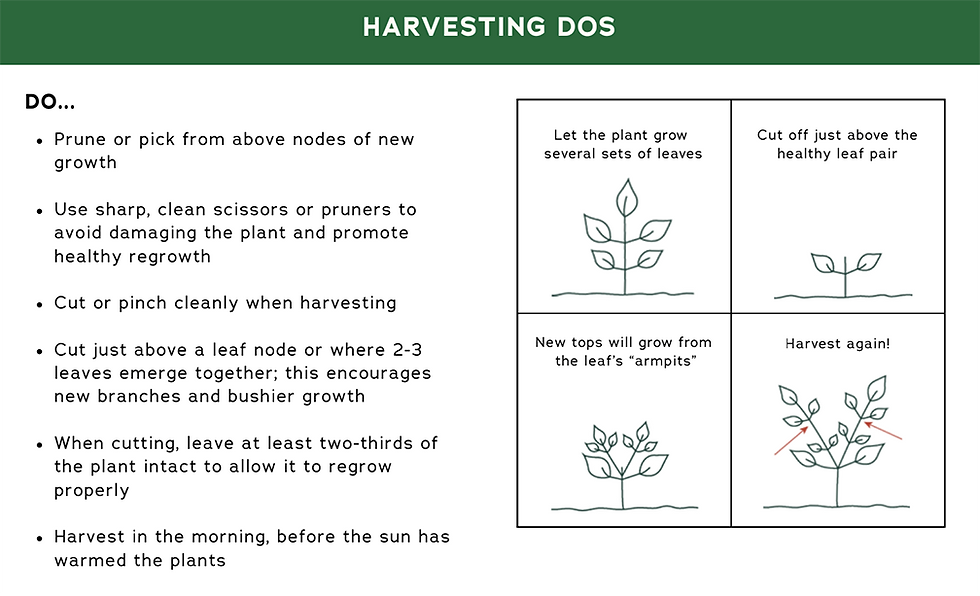
By supporting a local farmer like Stanoch, we're not only expanding what we think of as our team, but we're also, in a way, celebrating the vendors who provided the ingredients for our founders' offerings in those initial farmers-market days.
Besides all that, the Garnish Garden is just fun. One of the joys of perennials and self-seeding annuals is the surprise factor. Every spring, we get to discover what made it through winter and what the squirrels may have helpfully relocated for us.
In the future, as the soil continues to improve across the rest of our site, the dream is to expand into a full edible floral prairie. We'd also love to reach a point where we're not buying herbs at all during harvest season (Dudycha, especially, dreams of us one day having an enormous rosemary bush).
WHAT WE'VE LEARNED AS WE’VE GROWN
If you're thinking about starting your own garden next spring, here's what Stanoch and our team suggest:
Mulch with straw at the end of the growing season to protect the soil
Prune fruit trees in February and raspberries in late fall
Pull weeds before they go to seed (seriously — do not skip this one)
Before winter sets in, cover your chosen area with cardboard to prep it and kill off crabgrass
Today, as we reflect on the Chowgirls Garnish Garden going from weed patch to wonderland, we recognize that it's become more than a source of ingredients. It's also a place where our team can conduct meetings, eat lunch, or simply slow down and watch the bees and butterflies amble from flower to flower. Amid the organized chaos of catering, that has mattered more than we expected.
So, with farmers market season upon us, we are, as always, thinking locally. These days, though, "local" is just a few steps out our back door.


Comments